
The gap that started it
The idea for Openleet started in 2021, out of a problem we kept hitting in our own client work: small businesses had their information scattered everywhere — inconsistent hours on Google, a stale website, a directory listing nobody maintained. We started building in 2023, initially as a straightforward website builder. The more we built, the clearer the real problem became: businesses didn’t just need a website, they needed one accurate source of information that stayed correct everywhere it appeared — including to the AI assistants and search engines customers now use to find them.
Built to be found, not just built
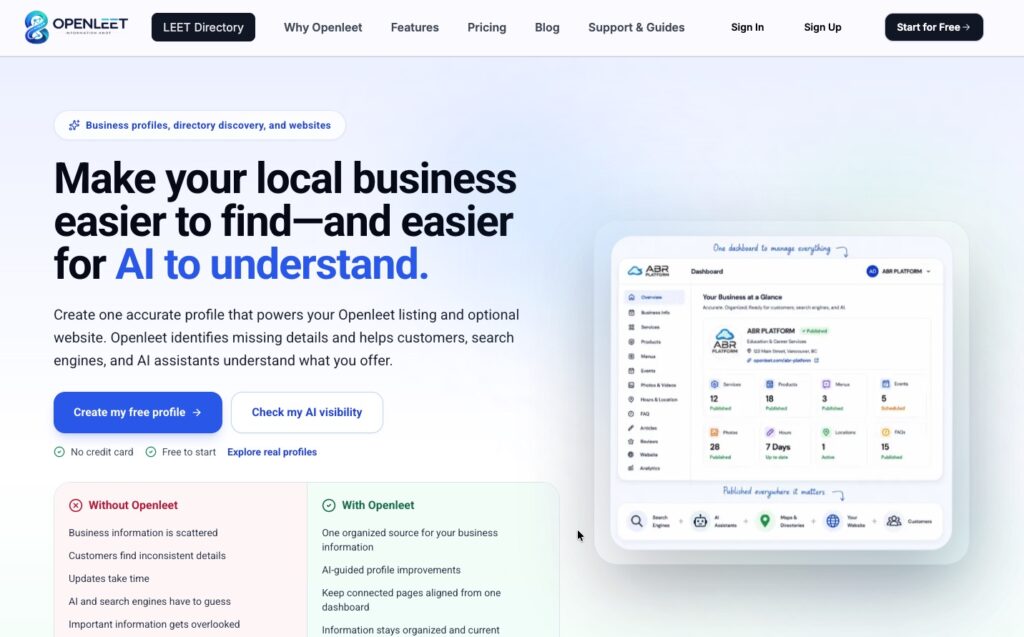
We built Openleet from scratch on Next.js and React, focused on speed and mobile performance first — a business owner filling out their profile between customers shouldn’t be fighting a slow interface. What started as a builder grew into something broader: fill in your profile once, and it powers a public directory listing, structured data that search engines and AI tools can actually parse, and — if you want it — a full website built from that same data, so nothing ever falls out of sync.
One profile, doing two jobs
You can see it in practice on our client’s listings — services, hours, reviews, articles, and photos, working as both a directory listing and a real website, with nothing to maintain twice. Openleet is still evolving, but the core already does what we set out to build: one accurate profile that gets a business found, instead of a dozen half-updated ones.